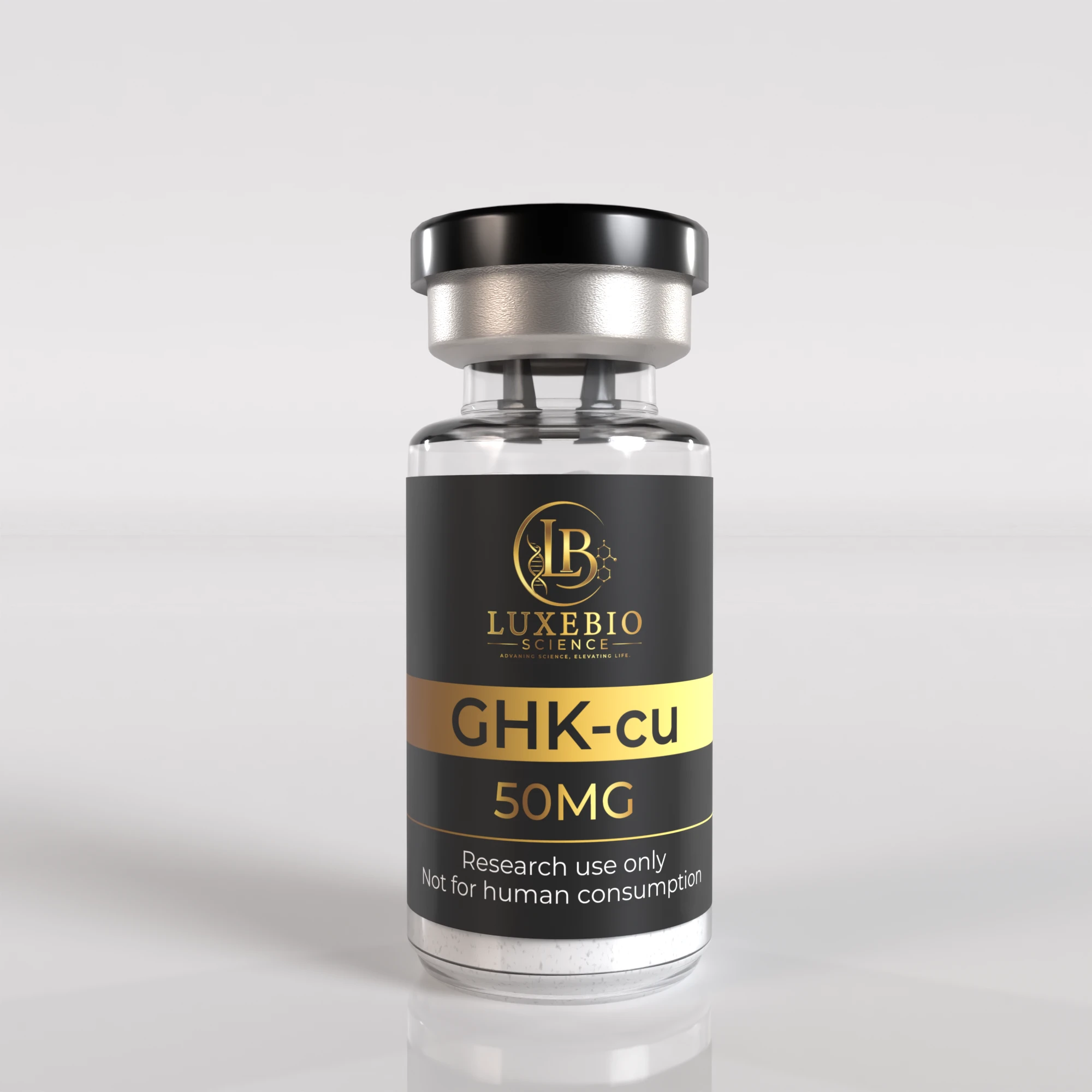

GHK-cu

Categories:

Research involving GHK-Cu commonly examines signaling systems associated with connective tissue activity, cellular adaptation mechanisms, and peptide-mediated biochemical regulation pathways. Experimental studies may include evaluation of physiological-response signaling behavior, metabolic communication systems, and comparative peptide interactions depending on dosage parameters, laboratory methodology, and biological models employed during investigation.

Price range: $ 30 through $ 40

Satisfaction Guaranteed

Secure
Payment

Third-party
Tested

Research Use Disclaimer

Research Use Only: All products offered are intended strictly for laboratory research purposes. Products are not for human consumption and are not intended for diagnostic, therapeutic, or medical use. By purchasing from our website, customers confirm they are qualified researchers or laboratories and understand the intended research-use designation.

GHK-Cu

GHK-Cu is a copper-binding peptide research compound investigated for its interaction with cellular signaling pathways, connective tissue biochemical mechanisms, and peptide-mediated physiological regulation systems in controlled experimental environments. Research studies commonly explore its role in cellular communication activity, tissue-response signaling pathways, and biochemical adaptation mechanisms associated with peptide-copper complex interactions.

Research Context

GHK-Cu has been studied in laboratory and preclinical research settings involving peptide-mediated signaling systems, connective tissue communication pathways, and cellular-response biochemical mechanisms. Researchers commonly investigate its interaction with pathways associated with physiological adaptation activity, metabolic-response signaling behavior, and peptide-mediated cellular regulation in controlled experimental models. Its role in scientific investigation remains limited to molecular and biochemical pathway analysis rather than therapeutic or cosmetic application.

Research Overview

Research involving GHK-Cu commonly examines signaling systems associated with connective tissue activity, cellular adaptation mechanisms, and peptide-mediated biochemical regulation pathways. Experimental studies may include evaluation of physiological-response signaling behavior, metabolic communication systems, and comparative peptide interactions depending on dosage parameters, laboratory methodology, and biological models employed during investigation.

Key Research Focus Areas

  • Cellular Signaling Research:
    Investigation of peptide-mediated biochemical communication pathways and cellular-response regulation systems.
  • Connective Tissue Studies:
    Exploration of signaling activity associated with connective tissue pathways and physiological adaptation mechanisms.
  • Biochemical Regulation Analysis:
    Research involving peptide-copper complex signaling systems and cellular-response biochemical pathways.
  • Physiological Adaptation Mechanisms:
    Evaluation of metabolic-response signaling activity and cellular adaptation systems under controlled laboratory conditions.
  • Comparative Peptide Analysis:
    Investigation of peptide formulations to characterize signaling specificity and biochemical pathway behavior.

Important Compliance and Safety Information

This peptide compound is intended solely for research purposes and must be handled under appropriate laboratory conditions by qualified personnel. Researchers and institutions are responsible for ensuring compliance with all applicable regulations, biosafety procedures, and institutional research standards governing peptide handling and investigational use.

All laboratory procedures involving GHK-Cu should utilize suitable containment measures, approved documentation practices, and institutional safety protocols to ensure proper handling and experimental consistency.

For research use only. Not for human or animal consumption.

Lorem ipsum dolor sit amet, consectetur adipiscing elit. Ut elit tellus, luctus nec ullamcorper mattis, pulvinar dapibus leo.

Lab Report
Date Added :
05/28/2026

GHK-Cu

GHK-Cu is a copper-binding peptide research compound investigated for its interaction with cellular signaling pathways, connective tissue biochemical mechanisms, and peptide-mediated physiological regulation systems in controlled experimental environments. Research studies commonly explore its role in cellular communication activity, tissue-response signaling pathways, and biochemical adaptation mechanisms associated with peptide-copper complex interactions.

Research Context

GHK-Cu has been studied in laboratory and preclinical research settings involving peptide-mediated signaling systems, connective tissue communication pathways, and cellular-response biochemical mechanisms. Researchers commonly investigate its interaction with pathways associated with physiological adaptation activity, metabolic-response signaling behavior, and peptide-mediated cellular regulation in controlled experimental models. Its role in scientific investigation remains limited to molecular and biochemical pathway analysis rather than therapeutic or cosmetic application.

Research Overview

Research involving GHK-Cu commonly examines signaling systems associated with connective tissue activity, cellular adaptation mechanisms, and peptide-mediated biochemical regulation pathways. Experimental studies may include evaluation of physiological-response signaling behavior, metabolic communication systems, and comparative peptide interactions depending on dosage parameters, laboratory methodology, and biological models employed during investigation.

Key Research Focus Areas

  • Cellular Signaling Research:
    Investigation of peptide-mediated biochemical communication pathways and cellular-response regulation systems.
  • Connective Tissue Studies:
    Exploration of signaling activity associated with connective tissue pathways and physiological adaptation mechanisms.
  • Biochemical Regulation Analysis:
    Research involving peptide-copper complex signaling systems and cellular-response biochemical pathways.
  • Physiological Adaptation Mechanisms:
    Evaluation of metabolic-response signaling activity and cellular adaptation systems under controlled laboratory conditions.
  • Comparative Peptide Analysis:
    Investigation of peptide formulations to characterize signaling specificity and biochemical pathway behavior.

Important Compliance and Safety Information

This peptide compound is intended solely for research purposes and must be handled under appropriate laboratory conditions by qualified personnel. Researchers and institutions are responsible for ensuring compliance with all applicable regulations, biosafety procedures, and institutional research standards governing peptide handling and investigational use.

All laboratory procedures involving GHK-Cu should utilize suitable containment measures, approved documentation practices, and institutional safety protocols to ensure proper handling and experimental consistency.

For research use only. Not for human or animal consumption.

Size

100MG, 50MG

Reviews

There are no reviews yet.

Be the first to review “GHK-cu”

Your email address will not be published. Required fields are marked *

Age Verification!

*By continuing, you confirm eligibility and legal compliance.